

Builds · LedgerTB · Case study
Bookkeeping where the AI drafts and the accountant decides.
As a CPA, I kept asking how an AI agent could be useful inside the books without asking the accountant to give up control. LedgerTB is my answer: a free, open-source desktop ledger I built with Claude Code, where agents do the drafting and I review, post, and sign.
- Aug 11Public release, v1.0.0
- 23Releases in six weeks
- 900+Automated tests
- 2Outside contributors
The problem
Most bookkeeping software is now bolting AI agents onto the platform. The hard part isn’t adding agents. It’s knowing what they can do, tracking and reviewing what they did, and understanding it well enough to sign off on their work.
What I built
- 01
Real double-entry
If an entry doesn’t balance, it doesn’t post. Bank imports come in from CSV with saved formats, duplicate checks, and a step that confirms the import was complete.
- 02
AI that only suggests
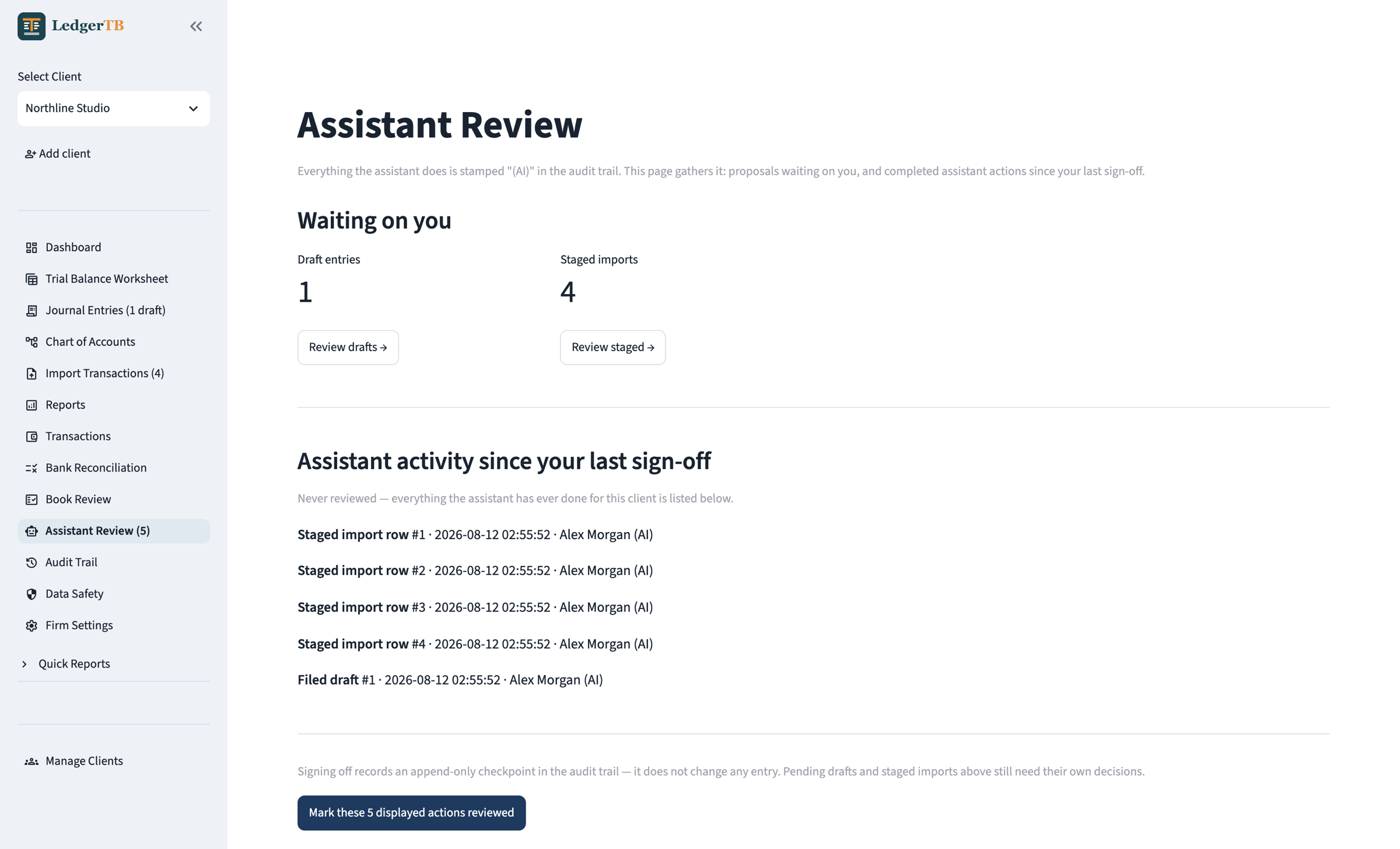
Claude proposes the account for each transaction and learns the client’s patterns. Nothing posts until I accept it, and every AI action is stamped (AI) in the audit trail.
- 03
The Close Map
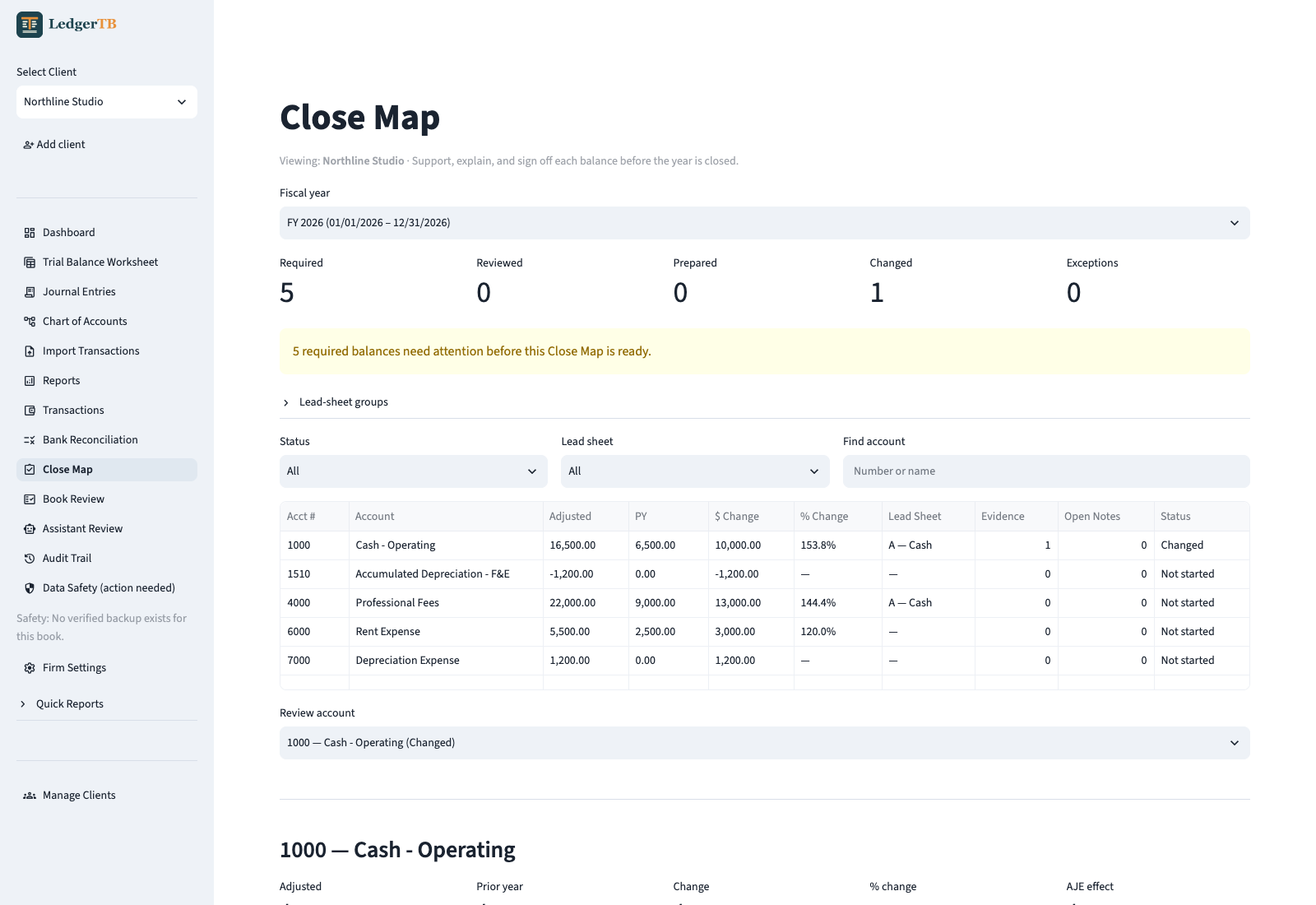
Every balance gets a lead sheet, its support, a variance explanation, and preparer and reviewer sign-off. Change anything underneath and only that account reopens.
- 04
A dial for agents
Claude Desktop or Claude Code can work the open book through an MCP server, at read, propose, or post. Each book is authorized on its own.
The decisions that shaped it
- AI drafts, the professional decides
- Suggestions are never auto-posted. One page, Assistant Review, shows everything the agent did since my last sign-off, so nothing it does can look pre-approved.
- Rules the database enforces, not the prompt
- The access levels are checked by the database engine on every connection. Even at full access the agent can only add. It can never edit or delete.
- Your books stay on your machine
- Each book is one encrypted file. There is no server, no account, and no vendor holding client data. A release that can’t encrypt won’t ship.
- Boring where it counts
- Plain Python and hand-written SQL, money stored as whole cents, and a test suite that covers the ledger math, posting rules, imports, and every agent permission.
How I built it
I’m a CPA, not an engineer. I decided what LedgerTB should do and how it should behave, and AI coding agents wrote the code, mostly Claude Code. Agents worked on their own branches and landed changes through pull requests I reviewed. The hardest part wasn’t the accounting. It was packaging: signing the Mac app, building the Windows installer, and making every release prove it works before it ships.
- First version, under the name ProBooks.
- Rebuilt around the trial balance and the close.
- Renamed LedgerTB and released publicly as v1.0.0.
- v1.7.2 ships work ported from an outside contributor’s fork, plus a fix written by Codex and reviewed by Claude.
- v1.8.0, the 23rd release in six weeks.
Built withPython 3.12StreamlitpywebviewSQLite + SQLCipherAnthropic SDKMCPPyInstaller
Where it stands
LedgerTB is public, free, and installable today. The Mac build is signed and notarized by Apple. Two outside developers have merged fixes into the public code, one for Apple Silicon and one for a macOS crash.
What it doesn’t have yet is a firm I can point to that keeps its books in it. That’s the next milestone, not a claim I’ll make before it’s true.
Checked November 2026 · v1.8.0