About
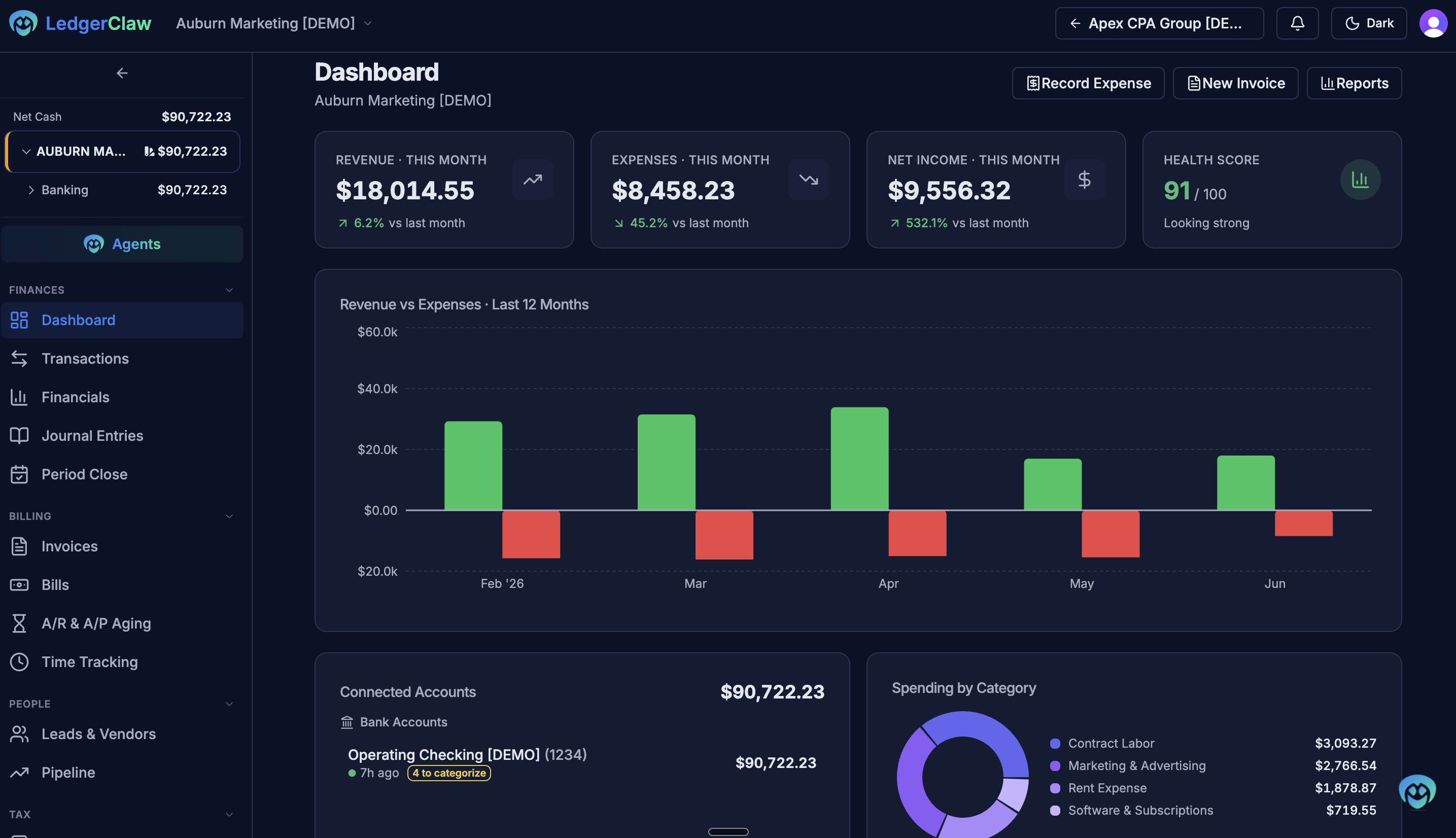
LedgerClaw is the AI-native operating system for a CPA firm: one place to onboard a client, keep their books, carry the work from book to tax, and run the practice, with a team of agents doing the heavy lifting and the practitioner in control.
- Onboard a client in days, not weeks. The Books Review agent scrubs the prior bookkeeper’s work and flags everything that looks wrong, right when a firm feels the most pain bringing a client over. (The category pitches this as “monthly review”; LedgerClaw turns the same agent into a new-client accelerator. It’s the wedge.)
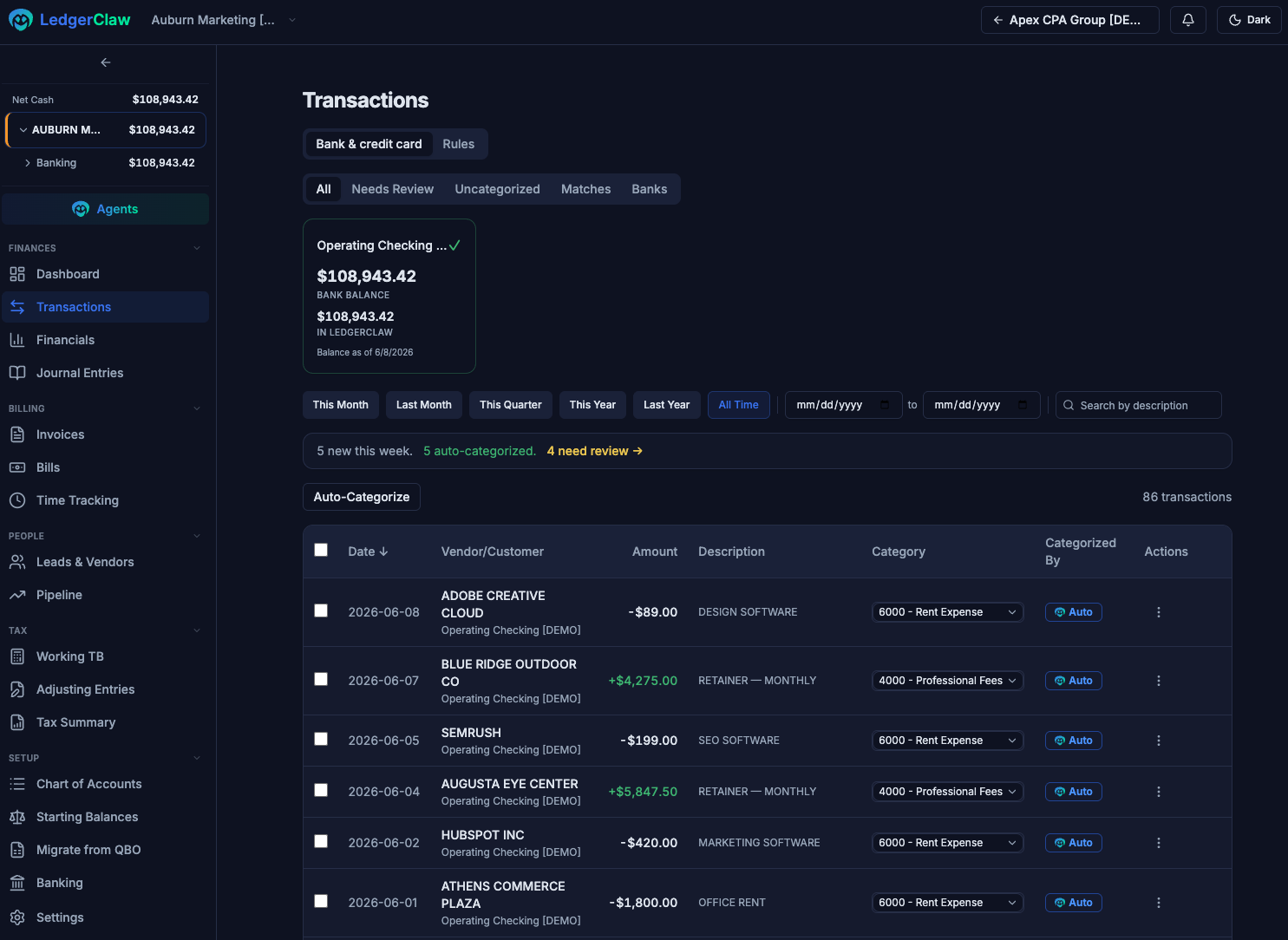
- Run the books month to month. Plaid sync, AI categorization with a learning loop, journal entries, and period close.
- Hold every client on one firm spine. Each engagement, time entry, tax workpaper, and Vault document lives inside a client context, with no switching tools between bookkeeping and practice management.
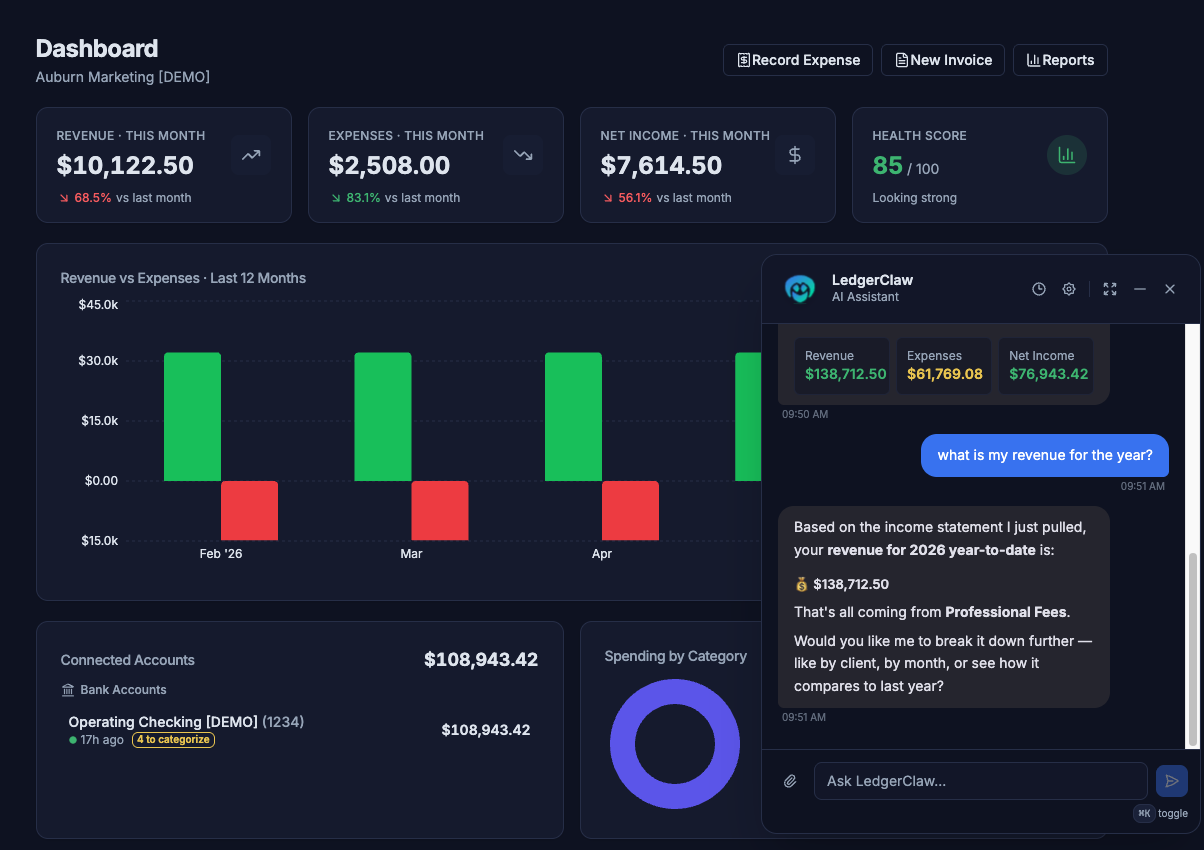
- Talk to your firm. A persistent AI assistant answers reporting questions, drafts entries (with a JE preview before anything posts), logs time, and adds leads, vendors, and clients.
- See what matters, proactively. A daily briefing and an anomaly engine surface cash-runway warnings, duplicates, stale uncategorized items, A/R aging, and more. The system tells you what to look at, not the other way around.
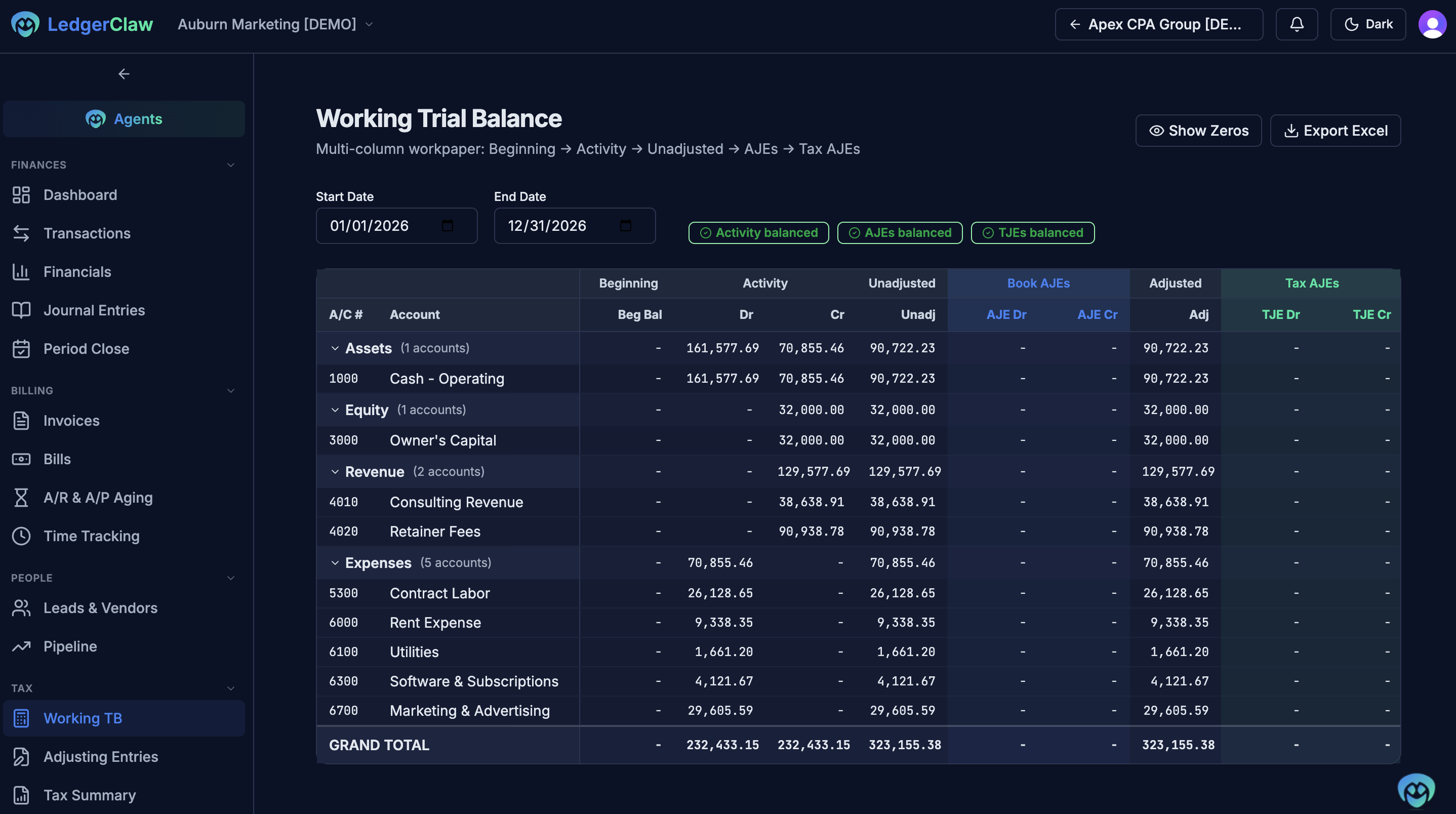
It runs on one multi-tenant firm spine that holds every client org in a single workspace: bookkeeping and close, practice management (engagements, pipeline, time, billing), a document vault, CRM, SMS capture, light tax workpapers, and the agents, so there’s never a switch between the books and the practice.
It’s built around a simple belief: the people who actually do the work should own the software that does the work, tools shaped by the way real CPAs run real engagements. In production today at ledgerclaw.app, behind a waitlist. Next is a DPA-gated pilot with a small number of CPA firms in September 2026: a pilot, not a general launch, so the remaining hardening is honest open work rather than a shipped defect.
How I built it
LedgerClaw is AI-native from day one, not bolted on. Built 100% by me solo, with coding agents as the engineering team.
- Two Claude models, two jobs. Claude Sonnet powers categorization and Vision OCR for receipts; Claude Opus runs the conversational tool-use loop.
- Agentic workflow: investigate → propose → execute. The assistant chains tool calls, asks for confirmation, then acts. Every write tool (record an invoice or bill, create a contact or lead, log time) is preview-first; nothing hits the ledger without a confirm.
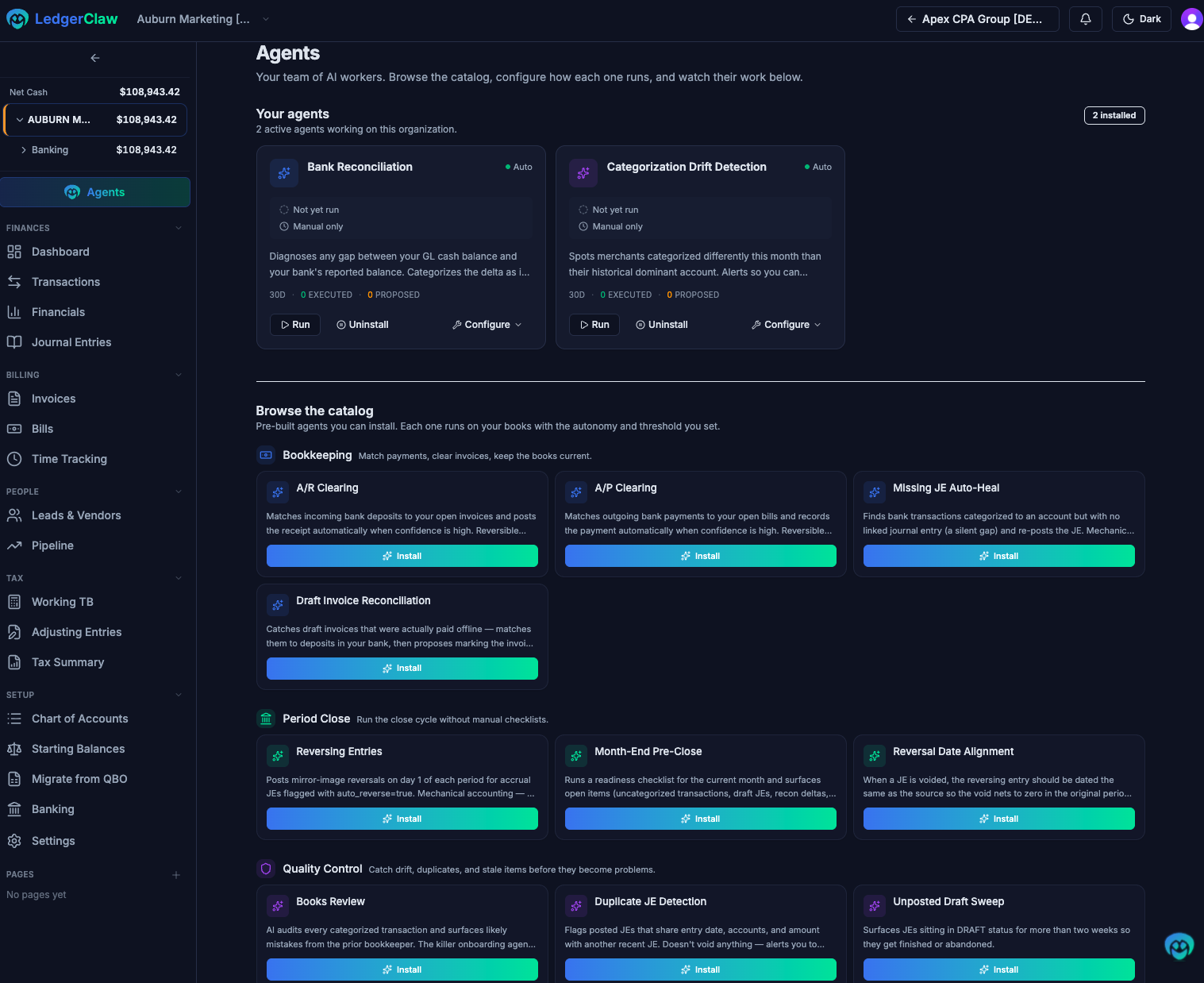
- Nine production agents under one framework (categorization, Books Review, anomaly scan, daily briefing, outreach drafting, lead research, and more), scheduled via Railway Cron and surfaced through a shared Activity Feed.
- Every row is isolated. Postgres row-level security across roughly 66 tables, with a CI regression guard, so one firm can never read another firm’s data.
- Multi-tenant by construction. Every table is org-scoped, so a firm holds many client orgs and switches between them like workspaces.